Women in Bastan Village, Kurdistan
Showing posts with label water grabs. Show all posts

Thursday, September 26, 2013

International Activists Meet in Baghdad to Discuss Legal Strategies to Protect the Tigris River

BANNER_tigri
For Immediate Release-Baghdad 26th of September

Baghdad, Iraq—Once the cradle of civilizations and agricultural haven, now Iraq’s land has dried significantly mostly due to man-made causes. For the past 20 years upstream dams in the Euphrates have reduced Iraq’s water income. Now the most important water lifeline in the country, the Tigris River, is being threatened by the construction of Ilisu dam within Turkey’s GAP project that violates international and Iraqi law. The Ilisu dam construction will have catastrophic effects on the lives of Iraqis, who suffer increased drought and loss of lands due to lack of water.

In this context and within the framework of the Iraqi Social Forum happening in Baghdad, the Save the Tigris Campaign is organizing the session: “Water Crisis between Iraq and Neighboring Countries: The Ilisu Dam, Exploring Legal Strategies in Iraq”, on 27 September 2013 in Baghdad.  The aim of this session is to discuss legal instruments available inside Iraq and elsewhere to protect Iraq’ s right to water and the equitable shares of the Tigris River with Turkey. International activist together with Iraqi lawyers, are attending the meeting that will analyze legal instruments and propose ways to advocate the Iraqi government to increase their efforts to demand Iraq’s right to water.

While Turkey is one of only a handful of countries that have not ratified the 1997 United Nations Convention on the Law of the Non-Navigational Uses of International Watercourses, this does not mean that Turkey is not bound by those principles set out in the Convention, which reflect general obligations on all states under customary international law. Customary Law related to shared waters is clear in its principle to cause no harm. In that sense, Turkey, in building the Ilisu dam will cause adverse harm to neighboring states and is in violation of customary international law. In addition, Turkey has failed to conduct a transboundary environmental impact assessment that is a threshold duty under international law and did not consult with the communities directly affected by the dam, which is also customary law. With its judgment of 2010 in the Pulp Mills case, the ICJ has recognized that prior assessment of transboundary impacts is a requirement of international law where there is a risk that a proposed industrial activity may have a significant transboundary impact.

In addition, Turkey has engaged in bilateral agreements with Iraq on the use of shared watercourses, like the 1946 Treaty of Friendship and Neighborly Relations states that the government of Turkey agrees to inform Iraq of any projects in order to render such projects to serve the interests of both Turkey and Iraq. Even, if there were no such treaties between the two countries, that does not excuse Turkey from its international obligations.

The session will discuss if it possible to make a case against private companies/Banks or other parties involved in the dam construction/financing. Private companies and banks should be held accountable for their engagement in projects that fail to comply with international law and violate human rights. These European companies, specifically the Austrian company Andritz has continued to provide services and products despite being advised of the human rights and environmental harms resulting from the project, the controversial nature of the dam and despite previous consortiums having been dissolved due to potential human rights violations. Iraqi law might provide for the possibility to proceed legally against any private/public entity that causes harm.

The Ilisu dam case has not been resolved, and it is Iraq’s responsibility to deal with it wisely, as the consequences of not doing so would mean giving Turkey a free ticket with respect to the construction of other dams on the Tigris River, that could result in a disaster to Iraq’s economic development.

Save the Tigris Campaign is a regional advocacy campaign with partners in Turkey, Iraq, and internationally that works to raise awareness about the economic and environmental impacts of the Ilisu dam on Turkey and Iraq.

Save the Tigris and Iraqi Marshes Coalition:
1. Iraqi People Campaign to Save the Tigris, Iraq
2. Civil Development Organization, Iraq
3. Iraqi Civil Society Solidarity Initiative, Iraq
4. Initiative to Keep Hasankeyf Alive, Turkey
5. Corner House, UK
6. Counter Current, Germany
7. Un Ponte Per, Italy

For more information Contact:

Ismaeel Dawood: 
Iraqi Civil Society Solidarity Initiative

Ercan Ayboga: 
e.ayboga@gmx.net
Initiative to Keep Hasankeyf Alive

Johanna L. Rivera:
 johanna.rivera56@gmail.com
Save the Tigris Campaign

###

Sunday, June 2, 2013

Rivers Unite, Dams Divide: A Struggle to Protect Rivers and Preserve Life


“The struggle of the Mapuche, Hasankeyf and the Amazon, is a struggle to preserve the planet” Mapuche leader Moira Millan to Osman Baydemir, Mayor of Diyarbakir.

IMG_3356
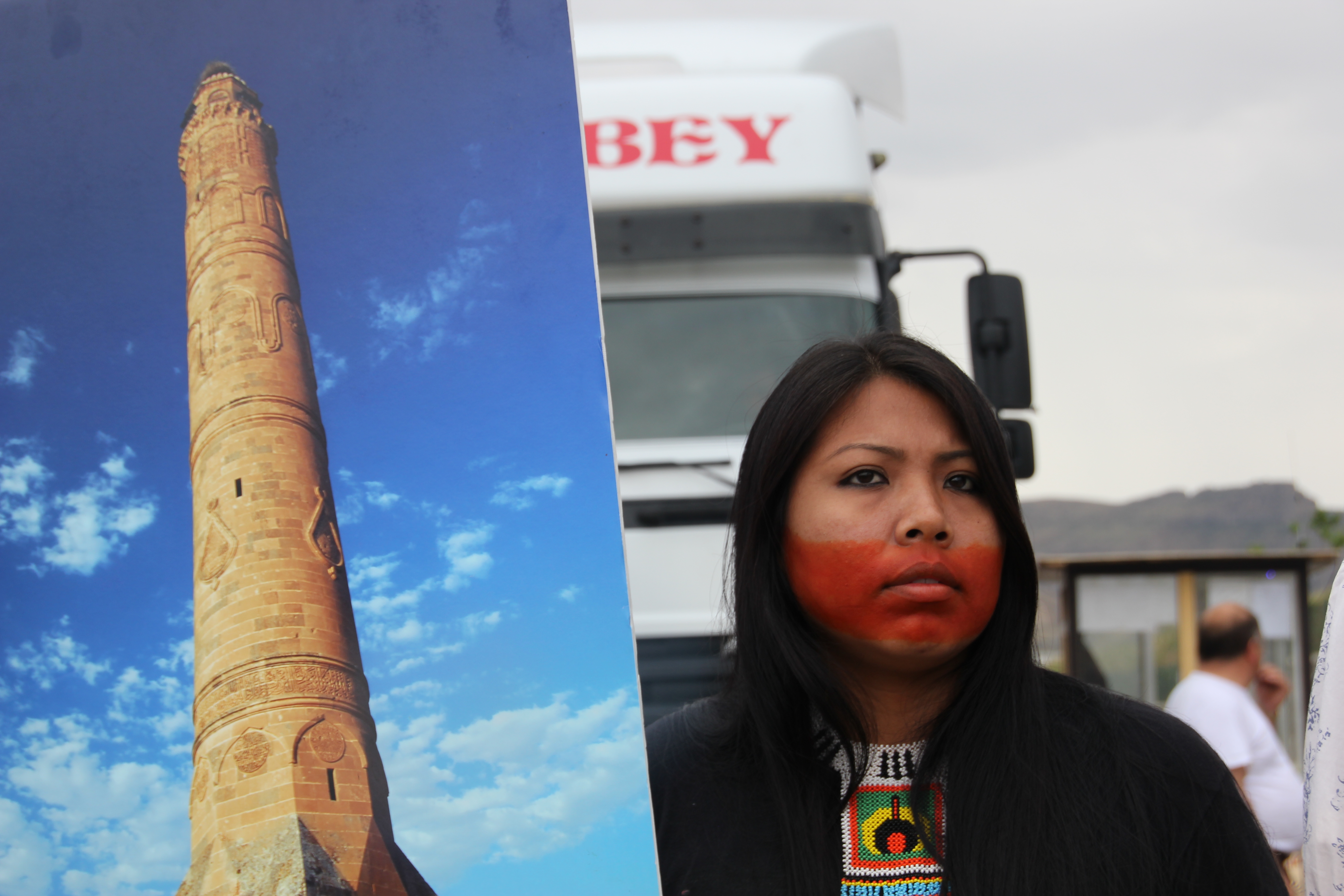
Mayalu, a young indigenous leader from the Matto Grosso communities in the Amazon holds a picture of a Hasankeyf mosque at the demonstration at the Ilisu construction site.

Last week I was in Diyarbakir together with an international delegation coming from as far as the end of the world. Indigenous leaders from Patagonia’s Mapuche, Amazon’s Kayapos, and Kenya’s Turkana people were part of an international rivers conference in Istanbul organized by Doga Dernegi, a local environmental organization. All of them had one thing in common: they were leaders of indigenous communities threatened by the construction of mega-dam projects and were there to show global solidarity with the people and the struggle against the Ilisu dam.

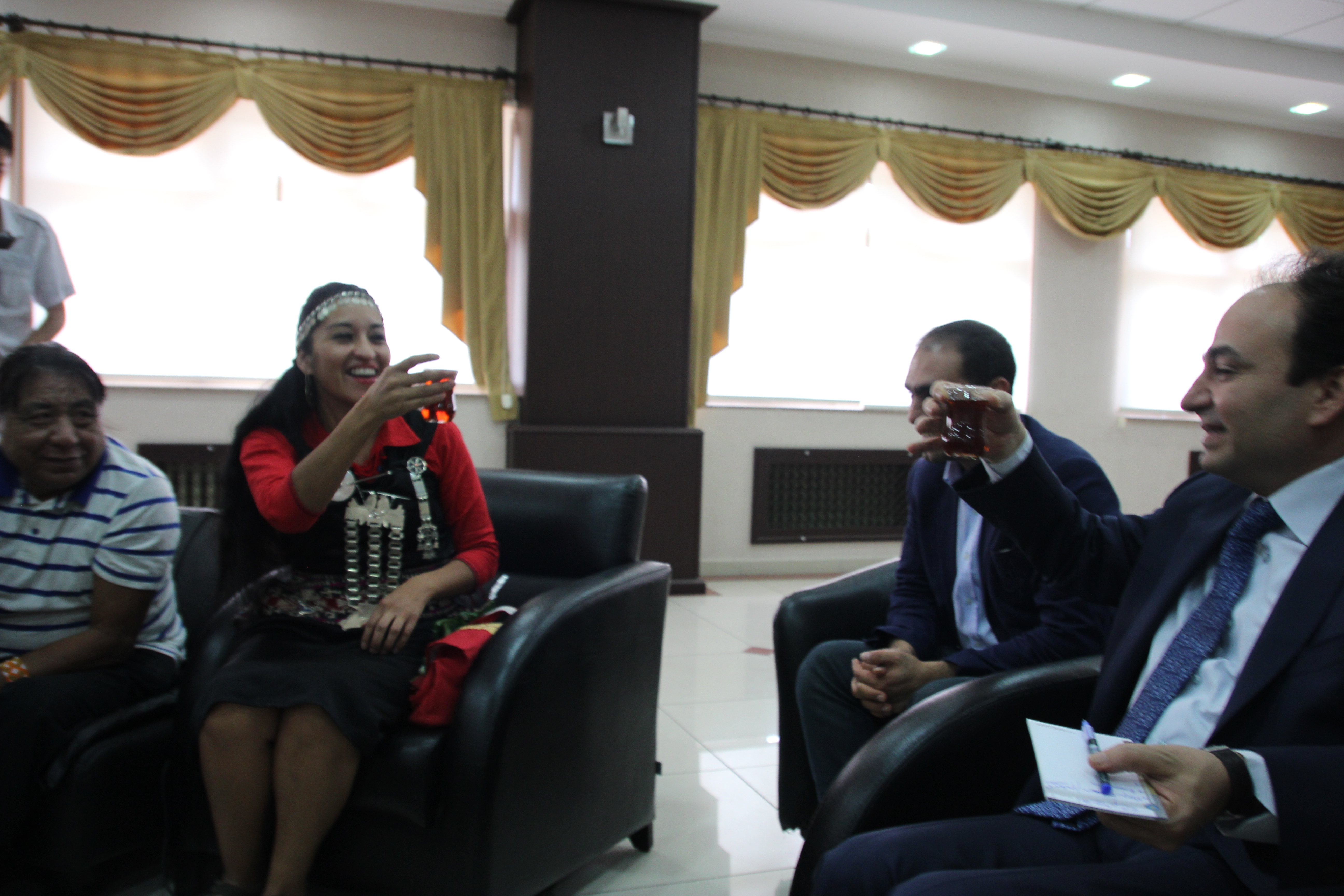
After the conference, the international delegation traveled to Diyarbakir and Hasankeyf to meet its people and politicians and to remind them of their responsibility to protect rivers and be the voice of their people. Mapuche leader Moira Millan told Osman Baydemir, Diyarbakir’s mayor that she had come from the end of the world to defend the Tigris River, “We stand in solidarity against the political and economical threats that are a threat to the continuity of peoples and cultures.” The mapuches have a long history in fighting to defend their land and rivers, Moira added: “To regain our freedom at the expense of the destruction of the planet is not true freedom, is the same logic that has enslaved us. I propose a toss for free rivers” and with a tea glass in hand, we all tossed for the world’s rivers.
IMG_3271
A toss for rivers: Osman Baydemir Diyarbakir's mayor and mapuche leader Moira Millan
The mayor received us in a spirit of unity and solidarity, “Your presence here will raise awareness of millions and will create a network of solidarity.” “Dams are blocking natural flow of life” and he noted, “For investment to be true, it has to take human, environmental, social and cultural heritage at its center.” Speaking about the peace process he added, “The process at the moment is described as a ceasefire, it does not mean is a lasting peace. We need to guarantee under the constitution cultural and language rights. For a lasting peace, all groups should be given cultural and religious freedoms...Governments have to change policies towards nature, as long as forests are developed and rivers are dammed, it is not sustainable.” 

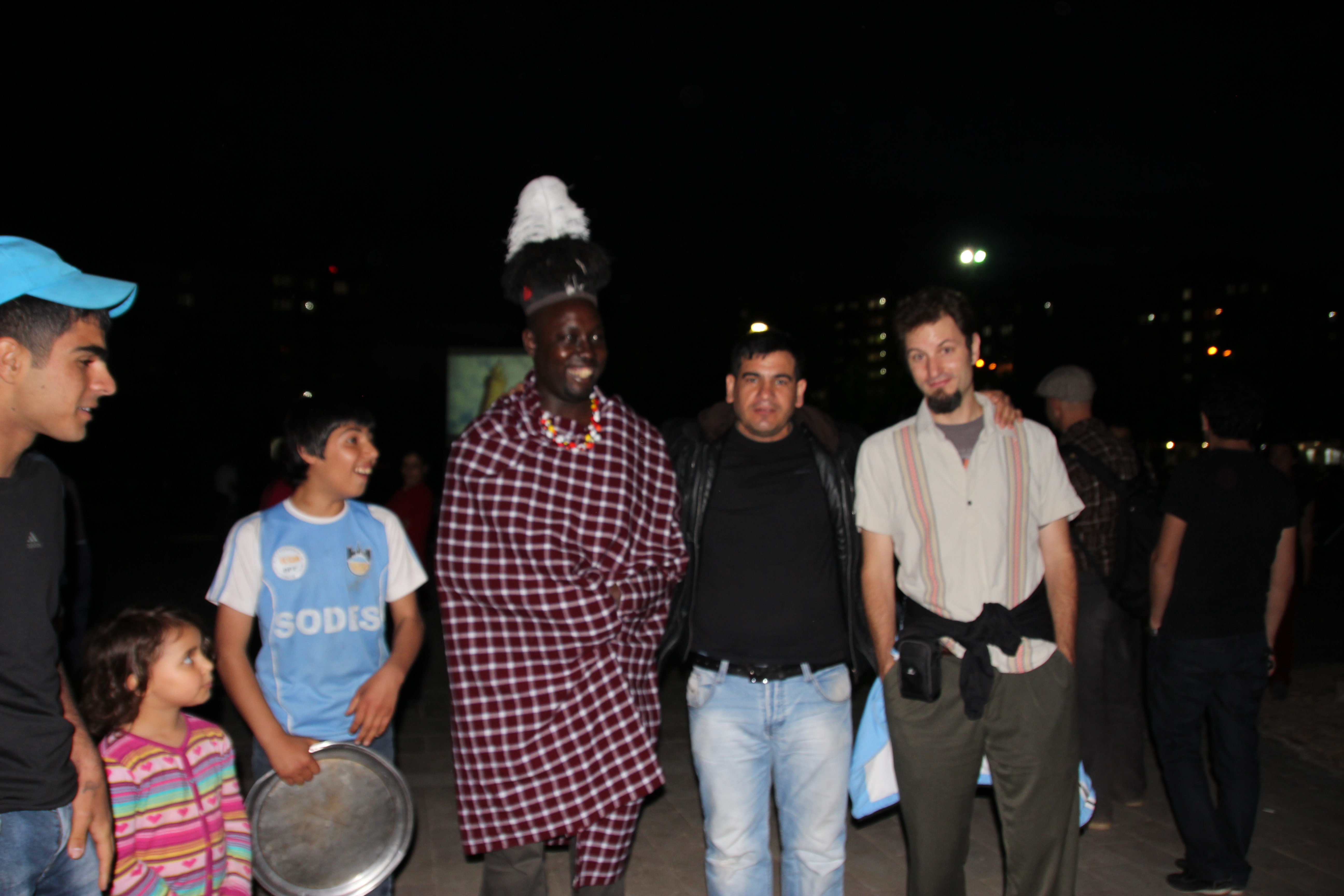
When I mentioned the Save the Tigris Campaign and civil society efforts in Iraq to increase awareness about the impact of upstream dams on Iraqi water resources, he was very happy. He mentioned that his city has started a pilot project of a waste treatment plant, to process the water before returning it back in the river, because it belongs to all the people living along the river. He encouraged cooperation through a recently launched initiative called “United Cities Local Governments,” which Diyarbakir is already a member, we could invite cities that lie along the river to develop stronger cooperation in projects. This could be an opportunity to work together towards solutions to the water issue. Later we moved to a square in the city for the showing of the Damocracy documentary. A lot of young people were there, especially curious about Joshua’s-the Turkana community leader- clothes and hat.
IMG_3321
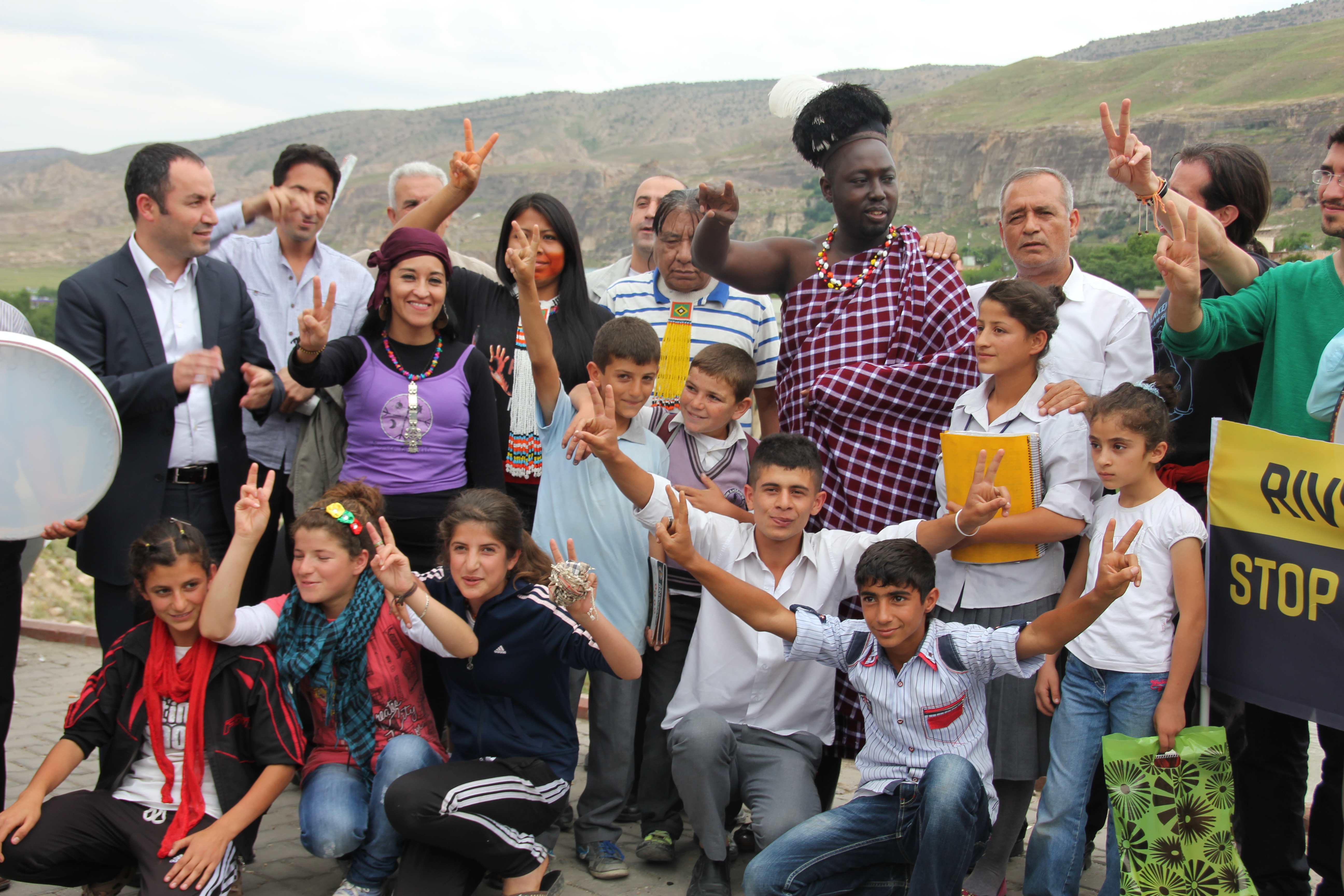
Joshua from the Turkana people in Kenya in Diyarbakir after the Damocracy documentary film
After the film, we had some time to share experiences and stories from our struggles that although different have many commonalities. Governments using violence and intimidation to undermine communities, displacement of already impoverished communities. Moira tells how in Argentina, the state is murdering indigenous people that oppose the way the state relates to nature and water. Two of her friends have been murdered. “It is very painful to think that tomorrow it can be me.”

An Unexpected Detour
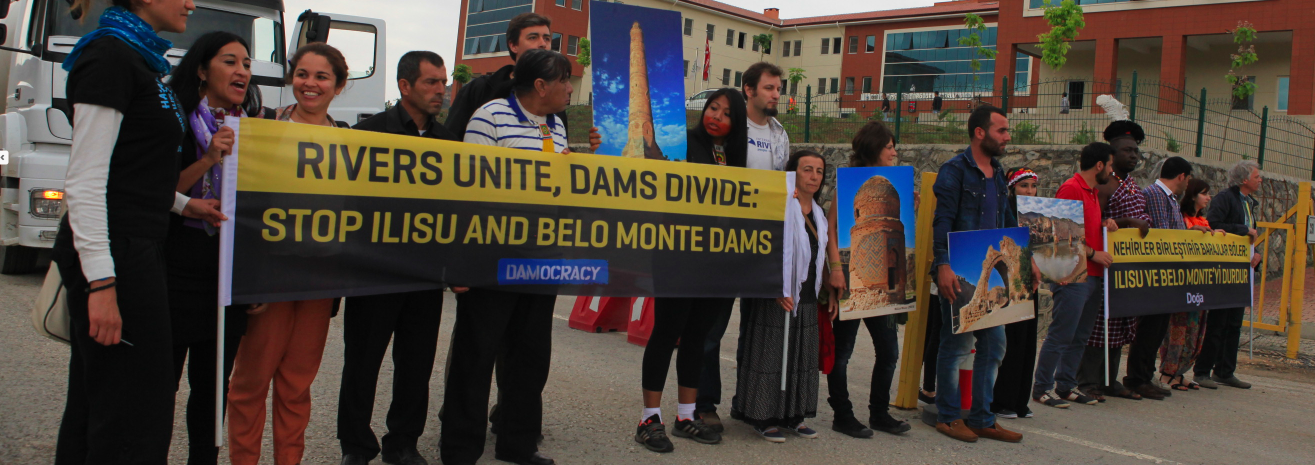
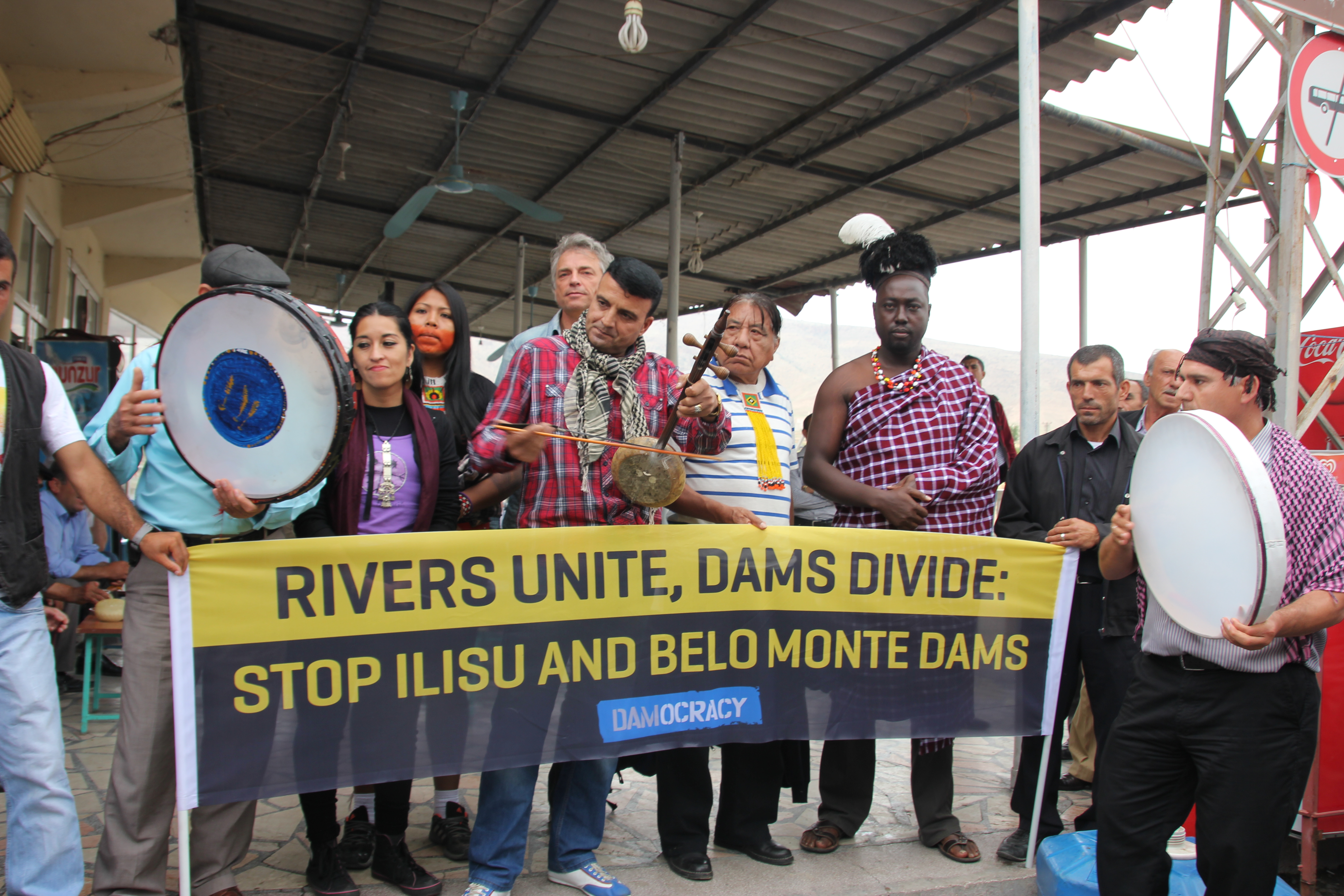
Next day we headed to Hasankeyf, but before reaching the town, we made an unexpected detour. We went to the Ilisu dam construction site. There we had a peaceful demonstration where leaders from the indigenous communities held banners that read; “Rivers Unite; Dams Divide. Stop Belo Monte and Ilisu Dams” blocking the entrance. The international delegation joined local protesters in solidarity against the Ilisu dam. One of the messages from Joshua, representative of the Turkana people in Kenya was that “development needs to come within the social justice framework, if communities are involved in the initial stages, we will have consensus.”

Screen Shot 2013-05-23 at 8.43.34 PM
International Delegation holding banners and blocking the entrance to the construction site of Ilisu dam
The image was powerful; a gathering of people from all over the world coming together to protect one of the rivers that gave birth to civilization; the Tigris River, separated by geography, language and culture, yet united in one voice, the voice of the river! When the delegation reached Hasankeyf after the protest, it was received with traditional music from Mesopotamia. We all walked towards the citadel, with music and displaying our message of rivers unite, and dams divide. Moira, the mapuche leader offered a traditional song from her people as a gift to the people of Hasankeyf.
IMG_3362
Musicians from Hasankeyf receive the international delegation to traditional music from the area
After the long day, we were sitting in one of the cafes overlooking the Tigris River. Chief Megaron was next to me and I was just thinking about the big responsibility of this man to protect his community. They are around 6,000 people. I was talking to him in spanish and he was talking back in Portuguese. I pulled out my computer, and despite we were both tired,  I tried to explain the issue of salty water coming into the river in Basra, I showed him several maps, trying to convey the message, showing the confluence of the Tigris and Euphrates in the Shatt al Arab. He got it.

In the meantime, Moira went into the river, to listen to it, something that is common in the mapuche culture; people talk and listen to the river. She came saddened and her eyes watering. She said the river is strong, it will survive, but what humanity is doing to its rivers is horrible. 

IMG_3478
The international delegation overlooking the Tigris river along with local residents and the mayor of Batman
It gives me a lot of energy when I meet people like Moira, Joshua, Chief Megaron, and Dicle, doing what it takes to protect water, and protect life itself. This more than a meeting was a peoples gathering, giving, and sharing. We shared music, our connection to water, our struggle, and our solidarity. Why do governments insist on solutions that are not lasting, not sustainable? Dams displace, destroy community ties, and biodiversity, and are NOT a form of clean energy. Dams life span is 70-100 years, and for that we want to kill thousands of years of civilization. The Tigris is the place where civilization itself started, with the Sumerians. Are we willing to give it away to be dammed and destroyed? Is this the form of development that we want? When a river dies, the spirit of its people die.
IMG_3482
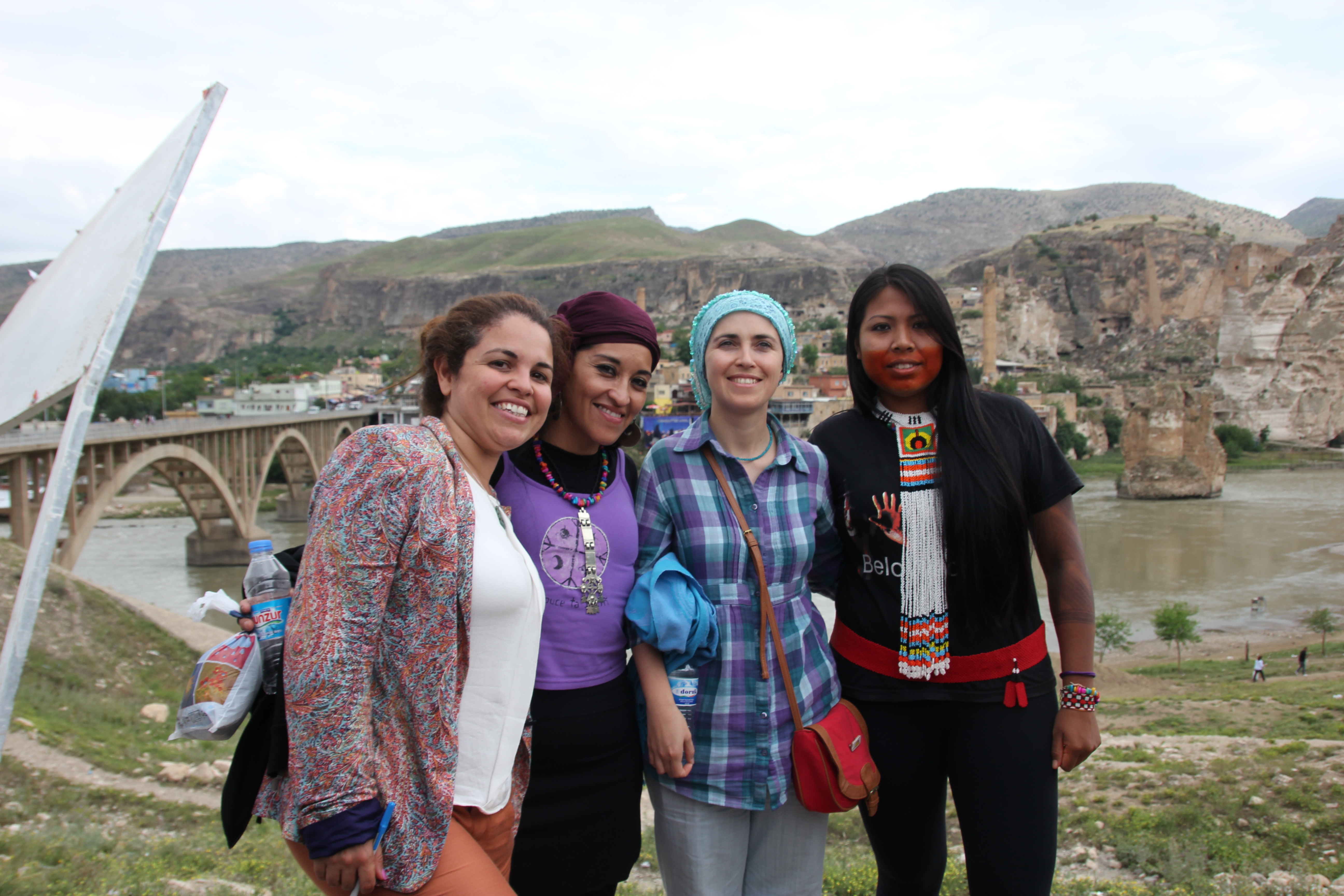
Women as powerful agents of change!
As we speak, the indigenous people in Brazil have re-occupied the Belo Monte construction site. They were ordered by the court to leave by May 30th, 4pm local time, but they have decided to stay, and are putting their lives at risk to protect their land and their water. The court has ruled to use force to removed them from the construction site. They are saying: “we will die, but we will not leave without being heard.” Again the same struggle, people against government, corporations and private interest. Nature and the environment against a powerful machinery of development, investments, loans and capitalism. Are they going to lose their lives or is the Brazilian president going to listen to these communities and find a peaceful solution to the conflict. It is their struggle; it is now our struggle.

IMG_3417
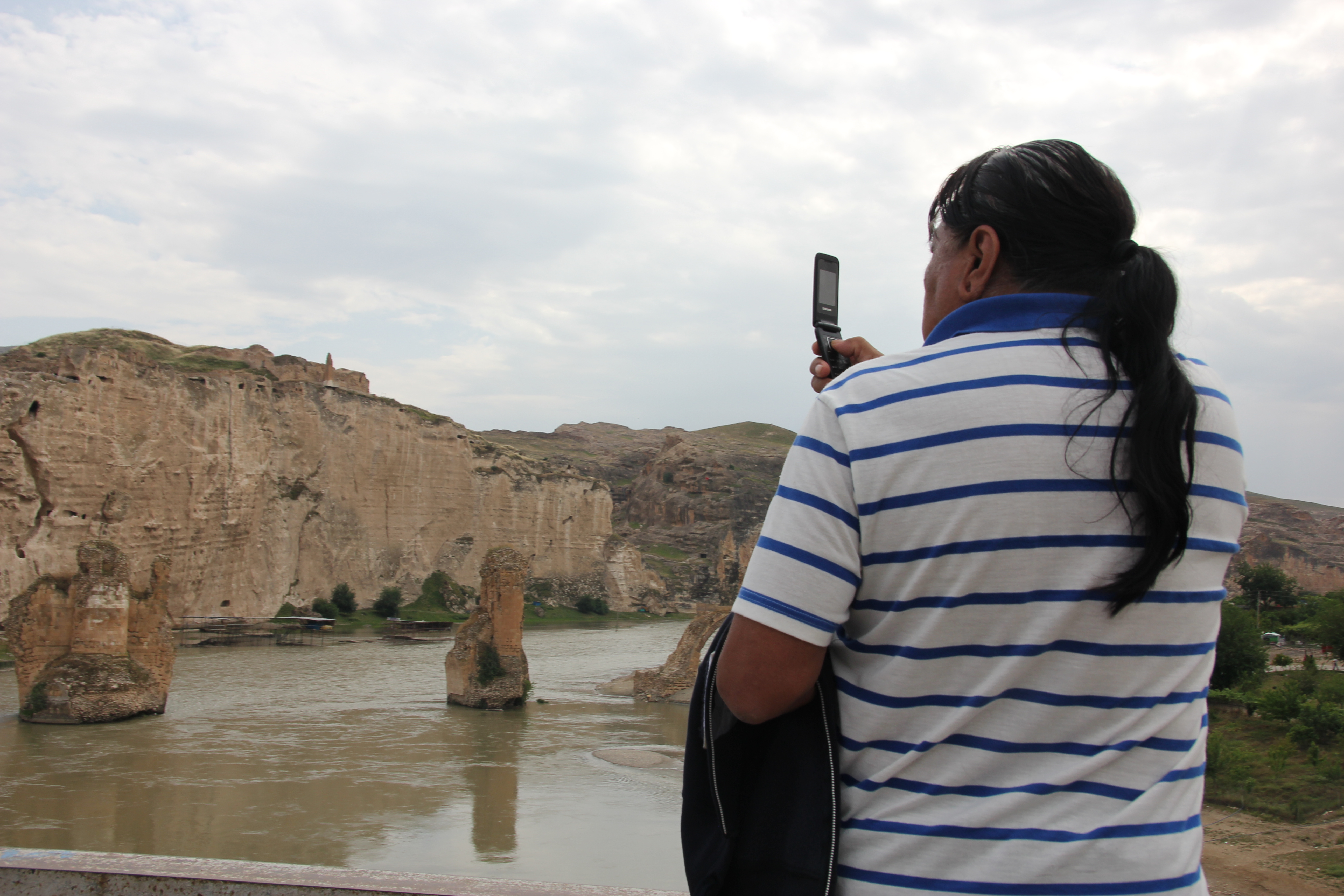
Chief Megaron looking at the old bridge, while in Brazil, its own people continue to ocupy the Belo Monte dam site

A similar version of this post appeared on the Iraqi Civil SOciety Solidarity Initiative
at http://www.iraqicivilsociety.org/archives/1830

Thursday, May 2, 2013

Journal from Iraq: Global Solidarity, Transboundary Water and the Challenging Work of Saving a River

May 2nd, 2013, Sulaimaniya, Kurdistan, Iraq

I've been off writing for a long time. Lately,  a sense of overwhelming has won me. Since last March, I was extremely busy with a lot of travel, which I love, but I get tired and often sick. Working on an advocacy campaign to protect Iraq's right to water has been the most amazing experience of my life, personally and professionally, but also a very demanding  task both physically and emotionally. 

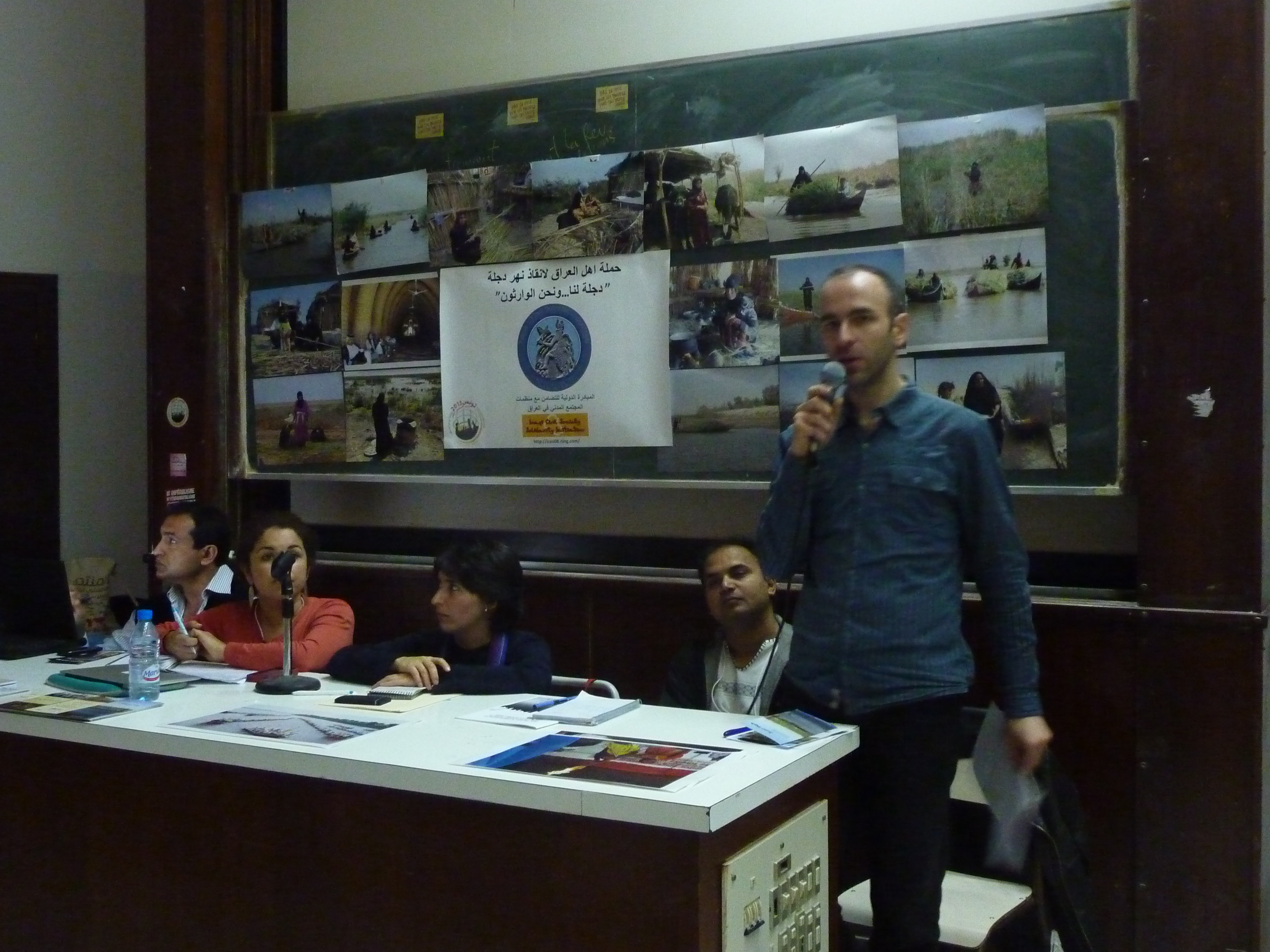
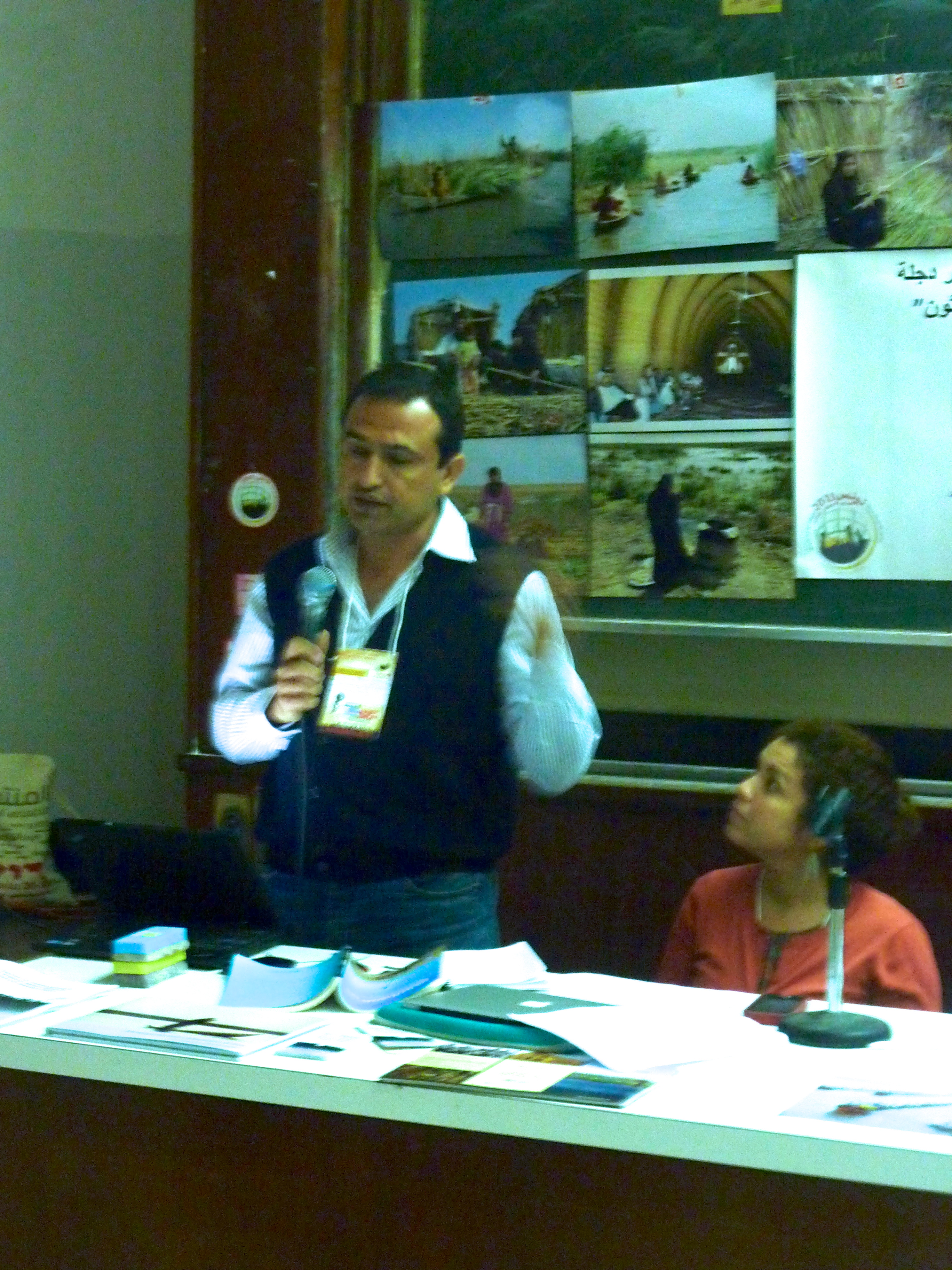
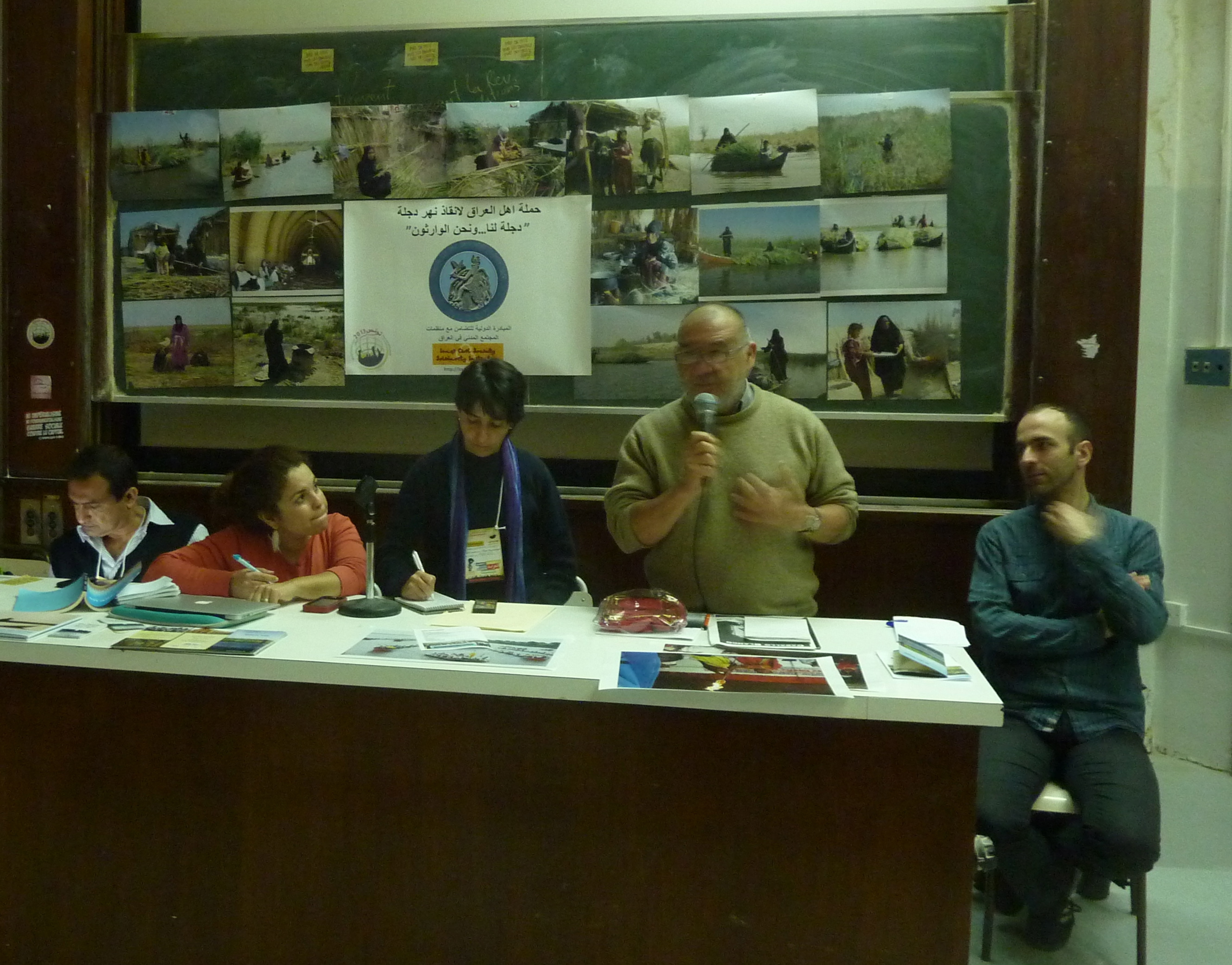
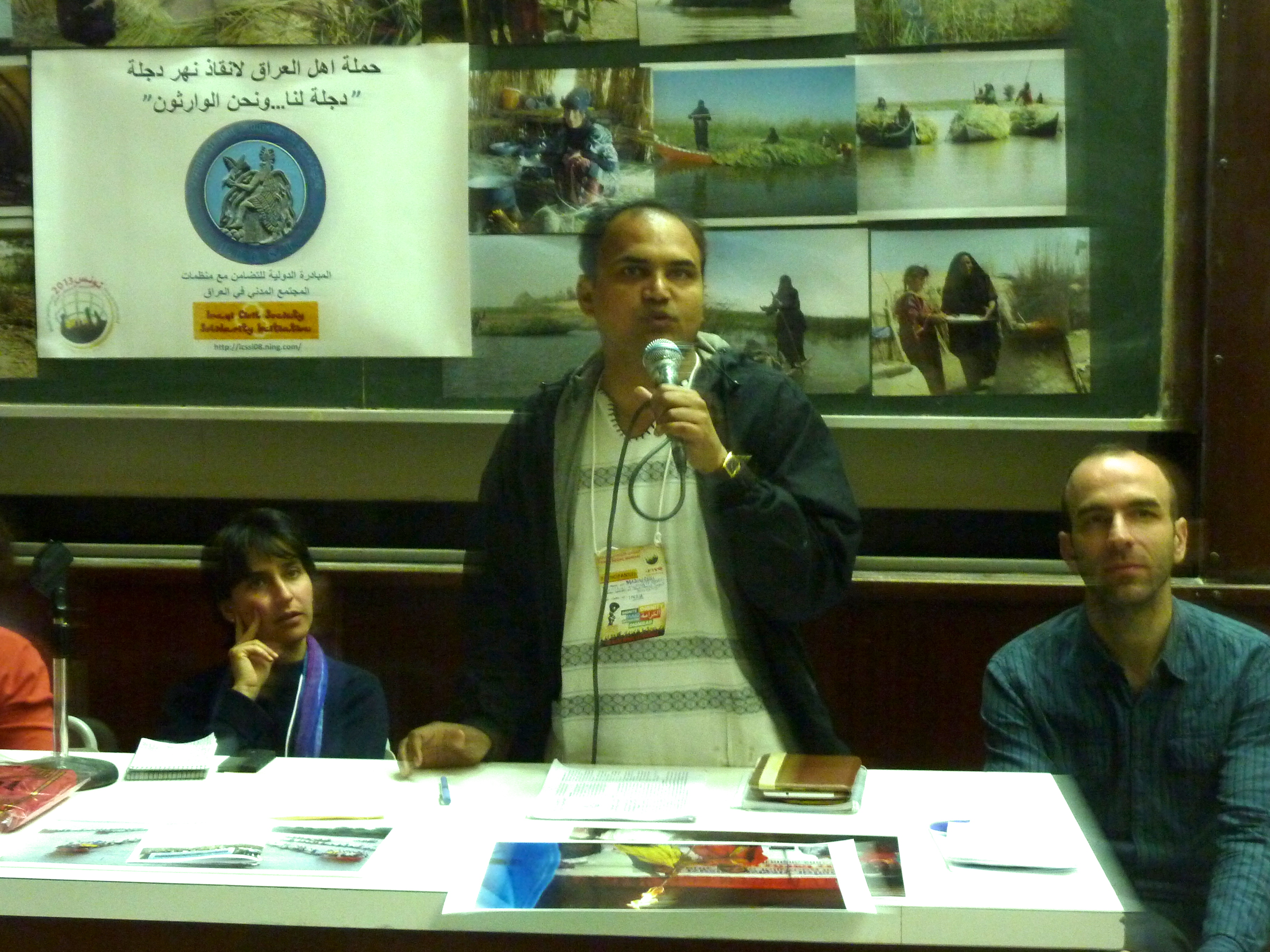
In March, I was in Tunis, for the World Social Forum and had the opportunity to share experiences with other water activists and community organizers from all over the world. We organized a session on global solidarity against water grabbing by mining and dam projects with other two groups from Turkey and Latin America. It was amazing and we got to meet people from Peru, Mexico, India, Turkey and share experiences on the same issues: water grabbing.  Then I went to Basra, to be part of the first green festival on the Iraqi Marshes. I was denied entry, and deported back to Turkey. 

In Tunis, at the Climate Space talking about our session on dams and mining projects

From there, I traveled to Hasankeyf to share our struggle with the people who's lives will be directly impacted by the Ilisu dam. People in Hasankeyf  have been living in limbo for the past 10 years due to lack of certainty about the project's plans.
View of the Hasankeyf Artukid Bridge and the Tigris River
At the Green Festival in Suleimaniya with material
about the Save Tigris Campaign
Then back in Iraq, April saw a rise in violence, killing of protestors, and activists and an increase in the sectarian divide. That is discouraging and makes you reflect if your work is worthy. If I think about my work, its exciting and unique. A friend asked me yesterday what does a normal day looks like. There is no normal day, but this is how one of my days might look like: I could be speaking to Iraqi activists about how to strategize for next awareness workshop on water issues in Iraq, talking to international law experts getting legal advice on how to make people/government/transnational companies accountable for human rights or environmental law violations related to  dams projects affecting Iraq. To academics on transboundary water issues between Turkey and Iraq and the impacts of dams on Iraqi water resources. To journalists, explaining the aim of our advocacy campaign, or to common people about the importance to take steps to demand politicians to take action to protect Iraqi water resources.

I could be on any stretch of the Tigris River in Turkey, or in Iraq, or in the Iraqi Marshlands visiting the communities that will be affected by dam projects and explaining the efforts to protect Iraq's water.
A woman on the Iraqi Marshes in Chibayish, Nasriya province. The marshes are located in three of the south provinces of Iraq, Nasriya, Missan and Basra. 
Kids playing on the banks of the Tigris River in Hasankeyf, Turkey. This town is full of historical sites and is threatened to be flooded by the construction of Ilisu dam. The campaign I work, is to raise awareness about the impacts of this dam in Iraq and Turkey.

Taking to Iraqi Media after one of our seminars in south Iraq

All this is super interesting, but is natural to be tired and even discouraged, because as colleagues from Mexico shared with us, “these are long and tiring fights.” It is easy to get discouraged when you see or hear in the news what politicians really prioritize here in Iraq. The Iraqi government’s priority is to crack on protests, increase sectarian division, exploit the country’s resources for their own interest, while keeping people hostage, to surrender to the power –in the case the Shia majority to Maliki because he is the sole protector of the Shia majority population- and to look to their own political interests:  to consolidate power. The name of the game is Fear. On the other side, Turkey continues to appropriate water that belongs to Iraqis.

On a hiking trip to Kani Shook, one of the amazing canyons in Suleimaniya.
So how do I keep my sanity and motivation? In Spanish, there is a saying: “There is no calamity that last 100 years, nor body that can resist it.” When I m overwhelmed, I try to go into nature. Here in the north of Iraq, there is amazing nature, canyons, rivers, and mountains. Being in nature helps me to forget and to relax.

I trust that Iraqi people soon realize that division and sectarianism are not ingredients to develop a democratic and inclusive society. They must stop being fearful, and start to challenge the structures that prevent development. After years of war and dictatorship, Iraqis must work together to build a place based on inclusion not division, transparency, not corruption, redistribution of wealth [and Iraq has big wealth], and justice and protection of their environment. When they understand that those who want to bring fear and terror are the ones that benefit from a terrified population, that keep their power by instilling fear, then breaking the cycle of fear, will set them free. That, of course has a price; it does not come the easy way. That is part of history, no people have been granted freedom and justice; they have fought for it. I thin we have lost many, probably too many and is time to recognise that violence and terror cannot last forever.

Sunday, March 31, 2013

Notes from Tunis: Global Solidarity Against Water Grabs by Dams and Mining Projects


These are highlights from a session on March 29th, 2013, at the World Social Forum in Tunis titled “Global Solidarity Against Water Grabs by Dam and Mining Projects.” We had interventions and case studies from people affected by dams in Turkey, Iraq, and India; and communities affected by mining in Mexico and Peru. Claudia Campero a local organizer from Mexico and working with the Blue Planet Project moderated the session. She gave a general framework on why we joined dams and mining projects into one session. The stories shared the same themes: destruction of nature, devastation of communities, power struggles, and greed for profit. Dams and mining projects have common threads. They are frequently carried out without free, prior, informed consent of local populations. Their social and environmental consequences are huge. They lead to control of vast amounts of water by project operators, mostly transnational corporations. They disturb the water cycle of entire regions, putting the livelihoods of many at risk. Frequently rural communities are displaced. All this is a form of violence that includes loss of community ties and  trust, defamation of those who resist, sexual violence, beatings and even murder. These issues must be confronted wherever struggles against dams and mining are ongoing.  And all too often the activists find themselves criminalized.

Turkey: Ilisu Dam as a Political Tool
Ercan Ayboga from the Initiative to Keep Hasankeyf Alive gave a general overview of dam mega projects. Dams are one of the most controversial infrastructure projects around the world. More than half of our rivers are dammed, with over 50,000 large dams and about 5 million small dams.Today the biggest dam builder states are China, India, Brazil and very interestingly, Turkey and Iran. According to the World Commission on Dams, 50-90 million people have been displaced by dams. 500-600 million people living downstream have been affected. 80-90 percent of displaced people end up in poverty. In many instances governments end up with more debt than was forecast for a dam; and this is before the cost of environmental and social impacts are taken into account. Dams are used as an icon of development and clean energy. Yet, dams male a large contribution to greenhouse gases, they emit methane, which has 20 times more heating capacity than CO2.

Global Solidarity-Ercan

Ecologically, rivers are the most bio-diverse ecosystems with two-thirds of species found in rivers. Water quality is affected when water is stored in reservoirs. Politically, the Ilisu dam is used as a tool to undermine the local struggle for autonomy. Criticism of the dam is equated with  terrorism. The area where the dam will be built will affect historical and cultural sites that are more than ten thousand years old. The struggle for Hasankeyf in Turkey has being fought on many fronts: a big international campaign made the European export credit agencies withdraw their support for the project in 2002. On the legal front: two months ago a Turkish court ruled that the project had to stop because it was in violation of Turkish environmental law for not having an Environmental Impact Assessment. While the Turkish government appealed the court decision, saying that the project didn't need one because the law was approved after the project had been conceptualized. The effect of the court decision has been to slow down the construction.

Iraq: Ilisu Dam will Dry the Cradle of Civilizations
At the same time in Iraq, civil society has come together on a regional advocacy campaign with members from Turkey, Iraq, and Iran in a campaign to “Save the Tigris and the Iraqi Marshes”. The campaign works to raise awareness about the negative effects of the Ilisu dam in Hasankeyf in Turkey and on the local communities and water resources in Iraq. Salam Taha, from the Iraqi People’s Campaign to Save the Tigris explained that water flow to Iraq could be reduced by 50% if the dam is completed. That will affect both quality and quantity of water coming to Iraq, as well as increase unrest inside Iraq’s already volatile political situation. Further downstream, the marshlands of southern Iraq are also in danger. They are home to the Marsh Arabs and have global significance for their biodiversity and more than 5,000 years of history. They are home to numerous bird, mammal, amphibian and reptile species, many of which are globally threatened. The Central Marshes are currently being considered for UNESCO World Heritage Status and for National Park status. This valuable, unique, irreplaceable part of the world will likely be lost forever if the Ilisu Dam is completed.

Global Solidarity-Salam

Johanna L. Rivera, from ICSSI and the Save the Tigris Campaign Coordinator explained that their  campaign works to bring the issue confronted in Turkey and Iraq to the international community and to link it to the global struggle for water justice. On one hand Iraq is in a vulnerable situation as a downstream country, with virtually no negotiating power and no say on the decisions of the Turkish government. On the other hand, the volatile and sectarian nature of the government makes it difficult to make unified demands.  The campaign efforts included an open letter to the Iraqi government to look seriously on the issue of the Ilisu dam and to take concrete steps to protect water resources in Iraq. Additionally, the campaign wrote a letter to Andritz company regarding their involvement in the dam construction and equipment supply. Andritz is involved in other mega-dam projects like Belo Monte in Brazil and Xayaburi in Laos. The campaign is calling for a transboundary agreement concerning sharing the  water of the Euphrates and Tigris basin between the riparian states of Turkey, Syria and Iraq.

Global Solidarity-Johanna

Mexico: ” We are all Water” 
Our colleague Guillermo Rodriguez, from the Assembly of “La Vida” spoke about Caballo Blanco’s case in Mexico. Guillermo, started by saying that dam and mining struggles are interrelated and is “urgent to maintain resistance because these are long and tiring struggles”, as he described the fight “against transnational corporations and corrupt governments” that impose these projects on communities. Indebted governments are often corrupted by transnational companies to impose their policies and perpetuate the extractivist model. Gold Corp who has business in Mexico worth 90 billion dollars spends about 1 billion to influence the local government. “The key is the precautionary model, to stop these projects when there are rumors, when the men in suit come to the community or the engineers come with their measuring instruments”.

Global Solidarity-Guillermo
  
“Mining and Dams are death projects”, Guillermo Rodriguez, Mexican activist from Caballo Blanco community 
In Veracruz, a Canadian corporation, Gold Group wants to install a mining project called Caballo Blanco, that intends to extract 1 ton of gold in 7 years; resistance in Rodriguez’s community has prevented this mining project from starting, but it is not defeated because the government concession to the mining industry is for 50 years. Guillermo, a community organizer for more than 50 years said, “We had learned from our Peruvian brothers that water is more important than gold”. The zone where the project will be established will destroy a mesozoic zone where there is a unique type of palm which grows 1 meter every thousand years. The forest is now 5 meters that means about 5000 years. A biodiversity of 230 species of mammals with 500 different species of vegetation, orchids, bromeliads and a phenomenon that we call “bird river” with more than 5 million birds from Canada and U.S. travelling to South America during the migration season”. Above all we learned that the struggle is long, because the mining and dam projects are destroying lives. We have taken this message to the indigenous communities and they have understood that they have to defend their territory. 

India: Creating a Counter Narrative and Winning the Battle of Ideas
Global Solidarity-Madhuresh

We heard from our colleague in India, Madhuresh Kumar, from the National Alliance for People’s Movement where they have been fighting against dams for more than 20 years. Madhuresh Kumar shared some lessons learned from the Indian movement and the Narmanda movement for over 27 years. He spoke about a “Battle of Ideas”; the need to create a counter narrative to all these mega-projects that are sold as development. We need to ask the questions: Development for whom, at what cost and how? Who decides how development takes place? He talked about the need to create linkages with people fighting for other struggles and create a national network. In India, what proved effective was to create a counter-narrative to the government development propaganda. That took 20 years, but the key was to build linkages nationally with struggles for other rivers, for environmental, governance, and anti-corruption; eventually they created a national network. Fighting one project is one thing but to deconstruct the whole development project you need to win the ideological battle. Take very radical positions: “No Big Dams” and engage others in the discussion on how to do development, and on questions of democracy. Any movement is not only about affected people, is a battle for the whole country.  You engage all professional classes: teachers, lawyers, artists, filmmakers, musicians, journalists. Then you push your ideas through the whole society:   someone makes a film, another writes an article, suddenly, there is a professor teaching your ideas at university, friendly bureaucrats and judges.  So there is a domino effect that reaches the whole population. Narmanda Action committee was established in 20 countries and as a result  the movement was successful in ending World Bank support for the project in 1993. Lastly, he mentioned the importance of  tools like foreign solidarity to let governments know that the international community is watching; local struggles need to avoid being isolated from one another because we are fighting a global struggle.

Peru: Radicalizing Democracy
Nicanor Alvarado from the “Plataforma Institucional de Celendín” in Peru talked about the struggle against mining projects in Cajamarca. He said that what happens in Peru happens throughout all Latin America. You might have heard about the “Conga Conflict”, an emblematic conflict in all Latin America and the world. In the North Andes in Peru, indigenous peoples, the Quechua and Aymara, are leading a fight that has seen more than 300 leaders from indigenous communities murdered. The state and the corporations work together against the indigenous people. In Peru we are organized and we have established a permanent mobilization in the form of environmental defense fronts or “rondas campesinas” to protect the environment . Last year we had the Walk for Water where more than 100,000 marched and took over Lima and we defeated one of the biggest American corporations: Newmont Mining Corporation.

Global Solidarity-Nicanor

When we go out on our mobilization, we say goodbye to our families and we take with us nurses and stretchers because we don't know who’s coming back, is like we were going to war. Waiting for us at the mining site are 1000-2000 elite forces to shoot us; and they shoot us.  In 2009 we had 350 wounded and in 2012 we had 35 dead, 5 of them indigenous leaders and 90 wounded. They wanted to scare us, but that’s when we overthrew the second council of ministers. We have learned that the mobilizing and unifying agent of social movements and political parties in Peru is for the defense of the land, of our water and our territories. That is the articulating agent and from there we have started to develop a program, a political proposal and hopefully in 2016 an indigenous environmentalist will come to power in Peru. This is our desire and we are working for that. Only then we will uproot the extractivist model that leads to the death of the planet. We have to globalize the struggle, the transnational power groups have globalized their capital; why can’t we globalize the struggle? The people from the West and the North cannot remain silent about their transnational corporations, it is not like 500 years ago. Today, the poor from South to North have to fight together against this monster. The last struggle of mankind will be fought for the planet and for the Amazon. The proposal is to radicalize democracy and to move to a post-extractivist model.

Global Solidarity-Iraqis

“People united will never be defeated” Chanted Nicanor in the end...


The session was able to motivate us by listening to those who have been struggling for years in India, Peru and Mexico and to understand that change is possible, but change requires sacrifice and as Guillermo said, a long of struggle. Democracy is not given, it has to be fought. Read the Blue Planet Project Report released in Tunis: Dam Truths: A compilation of case studies about popular struggles against dams

A version of this article also appears on the Save the Tigris Campaign News Page.